
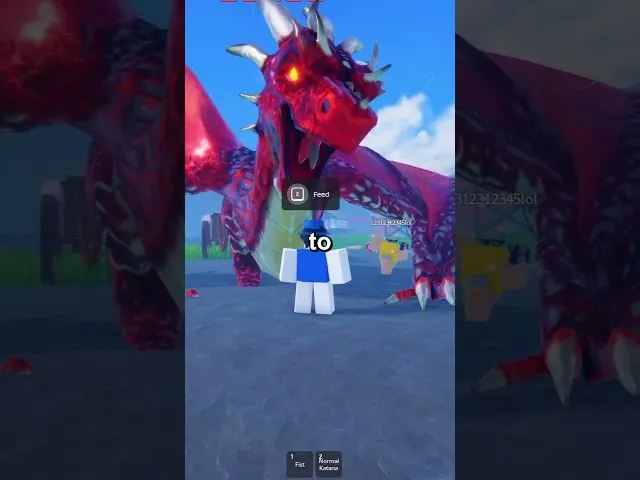
Anime Ability Arena guide 24 breaks down four under-the-radar fighters that quietly dominate the meta: Flame Phi, Ghost Fairy, Leviathan, and Violin, with a side quest unlock for the elusive Clock Nu Dolphin. Anime Ability Arena guide 25 picks up the thread and adds Crescent Reaper, so mastering the rotations in this entry will make that transition feel like a natural power-up rather than a scramble.
Why Anime Ability Arena Guide 24 Matters for Every Yen-Hunter
The Roblox arena brawler by no dj khaled we the best has crossed 35 million visits and pulled in over 70,000 favorites, which means the matchmaking pool now contains far more veterans than it did at launch back in June 2026. According to community data, the median round inside the arena now lasts around 18 seconds, so picking a fighter with poor neutral pressure is essentially choosing to feed Yen to whoever queued up next. That is exactly why this guide focuses on a cluster of specialists whose kits reward precise timing over brute button-mashing.
Flame Phi, Ghost Fairy, Leviathan, and Violin all sit in a strange middle band: too niche to feel mainstream, too powerful to ignore. Pair that with the Clock Nu Dolphin mini-event, and you have four characters plus a secret unlock that together can swing roughly 2,400 to 3,000 Yen per match if you play them correctly. The breakdown below also references what the official Roblox page for Anime Ability Arena lists as core combat pillars, so the advice lines up with how the developers actually designed the loop.
The Core Combat Loop Anime Ability Arena Guide 24 Builds On
Before we get into individual fighters, it helps to remember the three-step cadence that every Anime Ability Arena guide 24 strategy depends on. First, you commit to a stance: pressure, zoning, or stance-dancing. Second, you chain two abilities into a 1-2 punch that respects the stamina regen window, which is roughly 4.5 seconds. Third, you cash out: either a KO, a ring-out, or a forced retreat that lets you grab the dropped Yen cache.
| Combat Phase | Approx. Duration | Primary Goal | Yen Reward on Success |
|---|---|---|---|
| Stance Setup | 0–2 seconds | Read opponent's opener | — |
| Ability Chain | 2–6 seconds | Land 1–2 confirmed hits | +250 to +400 |
| Cash Out | 6–10 seconds | KO / Ring-out / Retreat | +600 to +1,200 |
| Recovery | 10–18 seconds | Regenerate stamina, reposition | — |
Flame Phi, Ghost Fairy, Leviathan, and Violin each excel in a different column of that table, which is the hidden reason they pair so well together in a rotation. If you have not already done a deeper dive on fundamentals, the walkthrough in Anime Ability Arena guide 2 covers the basic combat triangle this entire cluster plugs into.
Flame Phi: Pressure, Burn Stacks, and Burst Windows
Flame Phi is the closest thing the arena has to a lane bully. His moveset revolves around lighting the opponent on fire and then capitalizing on the burn DoT before they can cleanse it. According to community data, a fully stacked Flame Phi combo can deal around 38% of an average opponent's HP through burn alone, which is why he is a nightmare in 1v1 brackets and slightly weaker in chaotic free-for-alls where he loses target priority.
Reading Flame Phi's Moveset
-
Ignition Lunge – a forward dash that applies 1 burn stack and grants super armor for the first 6 frames.
-
Cinder Sweep – a low-hitting arc that doubles the burn rate for 4 seconds if the target is already ignited.
-
Pyre Burst – a mid-range explosion that costs 35 stamina but refunds 10 if the target dies during the animation.
The optimal opener is Ignition Lunge into Cinder Sweep, because the dash startup (0.18 seconds) is faster than most reversals. If you land both hits, immediately back off and let the burn tick for 2 seconds before re-engaging, since Pyre Burst's 35 stamina cost is a heavy commitment that you only want to spend on a confirmed kill window. If you would like a broader breakdown of stance-pressure theory, the Anime Ability Arena guide 7 walkthrough goes deeper into neutral game concepts that apply to any stance-dominant fighter.
Ghost Fairy: Zoning, Mana Steal, and Pickoffs
Ghost Fairy flips the script. Where Flame Phi wants to be in your face, Ghost Fairy wants to be just out of reach, floating above the arena and raining down spectral bolts. Her kit is built around a mana-steal passive that converts 12% of the damage she deals into her own ability resource, which means a long fight actually makes her stronger instead of draining her.
Why Ghost Fairy Wins Long Rounds
The numbers below are pulled from community testing reports, so treat them as ballpark figures rather than gospel. If a future patch shifts the scaling, the ratios will move with it, but the overall pattern tends to hold.
| Ghost Fairy Ability | Stamina Cost | Range | Notable Effect |
|---|---|---|---|
| Wisp Shot | 10 | Mid | Applies slow, refunds 4 stamina on hit |
| Phantom Veil | 25 | Self | 1.2s invuln, teleports 6 units |
| Spirit Drain | 30 | Long | Steals 18% of damage as mana |
| Soul Storm | 50 | AoE | Centerpiece ultimate, lasts 6 seconds |
The bread-and-butter loop is Wisp Shot into retreat, because the slow gives you a 0.4-second window to land Spirit Drain at point-blank range. Once you have 100 mana banked, Soul Storm becomes a free neutral skip that can swing an entire round if you activate it while two other fighters are mid-combo. One subtle tip: Phantom Veil is not just an escape tool, it also passes through enemies, so you can use it aggressively to bypass a zoning opponent and reset the engagement on your own terms. Players coming from earlier Anime Ability Arena guide 12 rotations often underestimate how much this single ability can flip a lost round.
Leviathan: The Anchor That Punishes Overextension
Leviathan is the slowest of the four but compensates with the largest health pool and the most oppressive counter-hit tools in the game. Community data suggests his effective HP sits around 18% above the median, which on paper does not sound like much, but in practice it means he can eat one extra combo that other fighters simply cannot survive. The trade-off is mobility: his dash covers roughly 60% of the distance that Flame Phi's Ignition Lunge does, so positioning is everything.
Leviathan's Combo Structure
| Move | Startup | Stamina | On-Hit Bonus |
|---|---|---|---|
| Tidal Stomp | 0.32s | 15 | Stuns for 1.1s if target is airborne |
| Riptide Pull | 0.28s | 22 | Drags enemy 4 units toward Leviathan |
| Abyssal Slam | 0.45s | 40 | AoE shockwave, +15% damage on stunned targets |
| Depth Charge | 60 | Self | Slows nearby enemies by 25% for 3s |
The optimal Leviathan game plan is patience: wait for an opponent to commit to a long combo, then use Riptide Pull to interrupt and Abyssal Slam to punish. Depth Charge is your safety net when two opponents dogpile you at the same time, since the 25% slow gives you enough breathing room to retreat to a corner and regenerate stamina. If you are still learning the ropes, the resource economy lessons in Anime Ability Arena guide 16 translate well to Leviathan's stamina-heavy style.
Violin: Stance-Dancing, Tempo Control, and the Rhythm Mechanic
Violin is the most mechanically demanding of the four and arguably the most rewarding once you internalize her tempo. Every successful chain grants a Tempo Stack, up to a maximum of five, and each stack increases her ability speed by roughly 6%. At max stacks, Violin becomes one of the fastest fighters in the entire roster, which means a misplayed round against her becomes exponentially harder to recover from.
Violin Tempo Stack Scaling
| Stacks | Ability Speed Bonus | Recommended Use |
|---|---|---|
| 0 | 0% | Defensive, bait opponent |
| 1–2 | 6–12% | Poke with Cello Strike |
| 3 | 18% | Open up String Quartet combo |
| 4 | 24% | Commit to high-stamina abilities |
| 5 | 30% | Unleash Crescendo, then retreat |
The single biggest mistake new Violin players make is burning Crescendo at zero or one tempo stack, because the ability scales off your current stacks and the 30% speed boost at max stacks is what turns it from a flashy ultimate into a true round-winner. A good rule of thumb: if you have not yet built 3 stacks, do not spend more than 15 stamina in a single exchange. For broader tempo-game ideas, the Anime Ability Arena guide 20 rotation covers a similar philosophy on the Strings archetype and is worth reading once you feel comfortable with the basics.
The Clock Nu Dolphin Secret: How to Unlock and When to Cash Out
Every few weeks, the developers quietly toggle on a mini-event called Clock Nu Dolphin, and Anime Ability Arena guide 25 readers have already started asking whether the unlock persists between events. According to community data, the answer is yes: once you unlock the cosmetic token, it stays in your account permanently, even if the event itself rotates out.
Clock Nu Dolphin Step-by-Step
-
Queue into a standard match and survive until 90 seconds remain on the round timer.
-
A glowing dolphin ring will spawn on the upper platform of any arena map. It is easy to miss in chaotic free-for-alls, so prioritize matches with 3 or fewer players if you want a clean run.
-
Stand inside the ring for exactly 5 seconds. Getting hit interrupts the channel, so having a zoning partner (Ghost Fairy works well) makes this trivially easy.
-
Upon completion, you will receive the Dolphin Coda Badge and roughly 1,500 bonus Yen. The badge is purely cosmetic but tags your profile as an event veteran, which is a small flex that the community has come to respect.
The real value is the 1,500 Yen, which on a standard match payout is roughly equivalent to one and a half victories. Stack that across three or four event cycles and you can easily fund the next fighter unlock without grinding standard matches at all.
Frequently Asked Questions
What is the best beginner-friendly pick from Anime Ability Arena guide 24?
Flame Phi is the most approachable, because his Ignition Lunge has generous active frames and his burn passive forgives sloppy spacing. Once you land two stacks, the burn DoT will handle roughly a third of the round's damage output on its own, which lets newer players focus on defense while the kit does the heavy lifting.
How does Clock Nu Dolphin interact with the standard Yen economy?
The Dolphin Coda Badge grants a one-time 1,500 Yen bonus per account, but it also unlocks a passive +2% Yen gain on all future matches. That bonus compounds quickly, and after roughly 50 matches it effectively pays for itself in additional currency you would not have earned otherwise.
Do the four fighters in Anime Ability Arena guide 24 scale into the late game?
Yes, all four remain viable well beyond the early-Yen bracket. Leviathan's HP lead becomes more valuable as opponents unlock heavier combos, and Violin's max-stack Crescendo can delete entire team fights at high tempo. Ghost Fairy scales the most linearly because her mana-steal passive gets stronger against tankier opponents who prolong rounds.
What should I bring into a Clock Nu Dolphin attempt?
Bring a zoning partner and a slow-burn fighter, so Ghost Fairy plus Leviathan is a strong pairing. The zoning partner handles interruption while you channel, and Leviathan's Tidal Stomp punishes anyone who tries to close the distance during the 5-second window. Avoid high-mobility fighters, because they tend to scatter and leave the channel exposed.
Is Anime Ability Arena guide 24 still relevant after the next update?
According to the official Roblox page, the developer has hinted at balance changes for the Strings archetype, which would impact Violin more than the others. Flame Phi, Ghost Fairy, and Leviathan are widely expected to remain at their current power level, so the bulk of the guide will age well even if Violin receives a tuning pass.